Drain Cleaning in Dallas, TX: Why Drains Clog and How to Clear Them
Published July 17, 2026 · Dallas Plumbers
A slow drain today is usually a blocked drain tomorrow. Here is how to tell a simple bathroom clog from a main sewer line problem — and what actually clears each one.
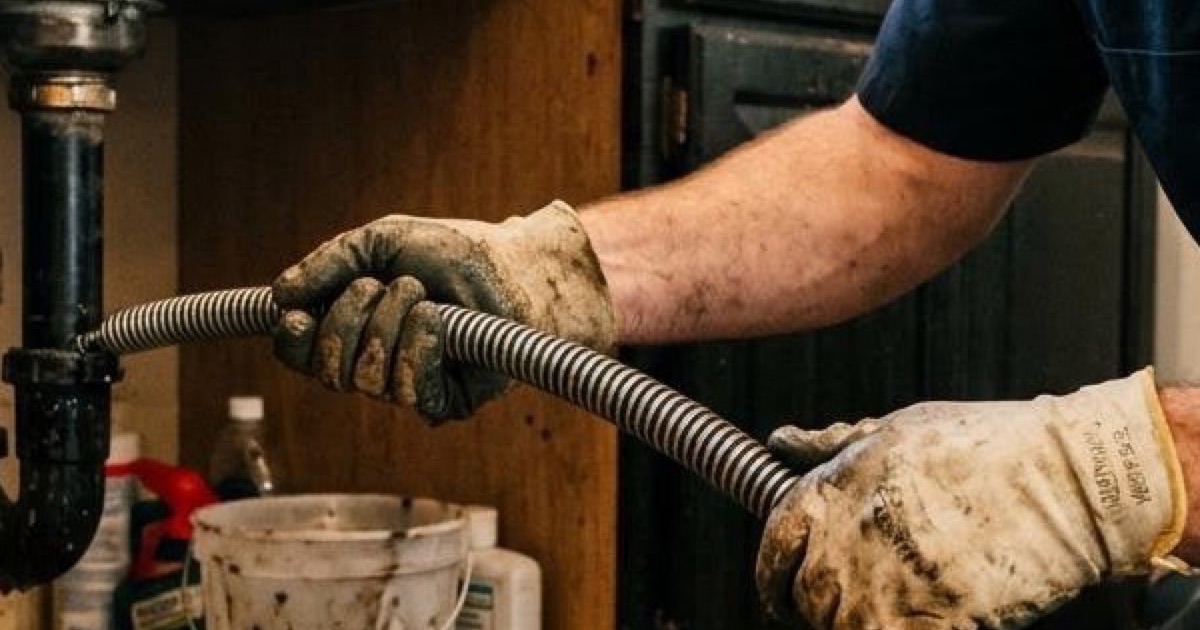
A slow drain is a warning, not an inconvenience. Almost every main-line backup we clear in Dallas started as one sluggish sink or tub that someone poured chemicals down for a few months.
Why drains clog in Dallas homes
- Grease and cooking fat. It goes down warm and liquid, then congeals on the pipe wall and collects everything after it.
- Hair and soap scum. The usual cause of bathroom drain problems — they bind together into a mat just past the stopper.
- Tree roots. Mature tree canopies in Lakewood, East Dallas and Oak Cliff sit above older clay sewer lines. Roots find every joint and crack.
- Aging clay and cast iron. Plenty of pre-1960s Dallas homes still have original lines that have gone rough inside, so debris catches easily.
- Foreign objects. Wipes labeled “flushable,” paper towels, and toys are a steady source of toilet and main-line blockages.
- Shifting soil. Expansive North Texas clay moves with wet and dry seasons, which can misalign pipe joints and create a catch point.
Is it one fixture, or your main line?
This is the most useful thing you can figure out before calling. If only one sink, tub or toilet drains slowly, the clog is local to that fixture. If several fixtures back up at once — especially if the lowest drain in the house gurgles or overflows when you run a washing machine or flush a toilet — that points to the main sewer line, and it needs attention quickly.
Other main-line signs: a toilet bubbling when the tub drains, water appearing at a floor drain, or a sewage odor in the yard or around a cleanout.
Why store-bought drain chemicals stop working
Chemical cleaners dissolve a narrow channel through a clog instead of removing it. Water flows again for a while, so the problem seems solved — but the buildup coating the pipe wall is still there, and it re-clogs, usually faster each time. On older metal pipes, repeated use of caustic cleaners can also accelerate corrosion, and leftover chemicals make the eventual professional visit more hazardous.
How professional drain cleaning actually works
Cabling / rooter service
A motorized cable with a cutting head is fed through the line to break up the blockage and cut roots. This is the standard approach for main lines and heavy blockages, and it clears the full diameter of the pipe rather than boring a hole through it.
Hydro jetting
High-pressure water scours the pipe wall, removing grease and scale that a cable alone leaves behind. It is particularly effective on kitchen and restaurant grease lines.
Camera inspection
When a line clogs repeatedly, a camera tells you why — roots, a belly holding water, a cracked section or an offset joint. It also confirms the line actually flows freely afterward, instead of assuming the clog moved on.
Keeping drains clear
- Pour cooking grease into a container and bin it — never down the sink.
- Use a hair catcher in showers and tubs, and clear it weekly.
- Flush only toilet paper. “Flushable” wipes do not break down.
- Run plenty of cold water while using a garbage disposal.
- If you have mature trees and an older sewer line, consider a periodic camera check before roots become a backup.
When a clog becomes an emergency
Sewage coming up into a tub or floor drain, multiple fixtures backing up at once, or wastewater surfacing in the yard are all urgent — that is a health issue, not just a plumbing one. Stop running water in the house and call. We handle drain cleaning and sewer backups across Dallas, TX 24 hours a day.